
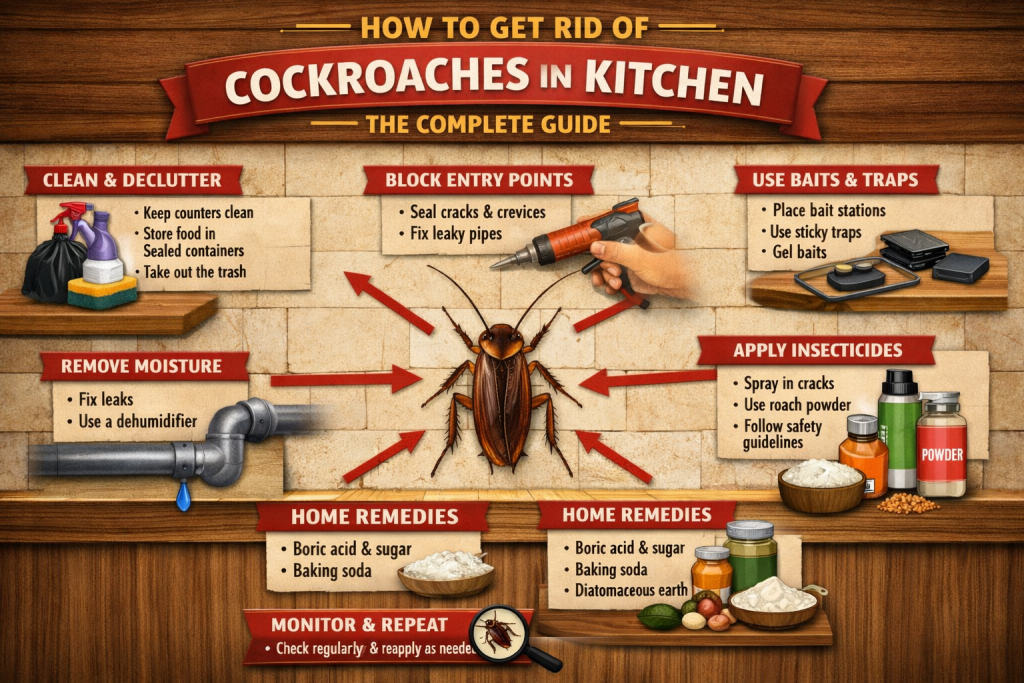
If you have spotted a cockroach across your kitchen counter or hiding under the sink, you are not alone. Cockroach infestation in the kitchen is one of the most common household problems in Hyderabad — and one of the most stubborn. These pests are resilient, breed rapidly, and can pose serious health risks to your family.
The good news? Whether you are dealing with a minor sighting or a full-blown infestation, there are proven methods to eliminate cockroaches from your kitchen and keep them from coming back. Let us walk through everything, step by step to get rid of cockroaches in kitchen.
Why Are Cockroaches Attracted to Your Kitchen?
Before jumping into solutions, it helps to understand why cockroaches love kitchens so much. Your kitchen is essentially a five-star hotel for cockroaches — it offers food, warmth, moisture, and shelter, all in one place.
Common cockroach attractants in kitchens include:
- Food crumbs and grease buildup around stovetops and counters
- Leaky pipes and moisture under the sink — cockroaches need water to survive
- Unwashed dishes left overnight in the sink
- Open garbage bins and food waste
- Dark, warm gaps behind appliances like refrigerators and microwaves
Understanding these areas is the first step to effective kitchen pest control.
Signs of Cockroach Infestation in Your Kitchen
Not sure if you have a cockroach problem? Here are the signs to watch for:
- Cockroach droppings that look like black pepper or coffee grounds near cabinets and counters
- A musty, oily smell that intensifies in closed spaces — cockroaches release pheromones
- Egg cases tucked behind appliances or inside cabinet hinges
- Shed skins as cockroaches grow through their lifecycle
- Live or dead cockroaches, especially during the night when they are most active
Spotting even one cockroach in daylight is a red flag — it often means the infestation is already significant and the population is too large for hiding spots.
How to Get Rid of Cockroaches in Kitchen: DIY Methods That Work
For mild infestations, these home remedies and DIY cockroach control methods can make a real difference:
1. Boric Acid Powder
Boric acid is one of the most effective natural cockroach killers. Apply a thin layer along cabinet edges, behind the refrigerator, and under the sink. Cockroaches walk through it, and it disrupts their digestive system and nervous system. Avoid applying it in areas accessible to children or pets.
2. Cockroach Gel Bait
Gel baits (available at hardware stores) attract cockroaches and kill them when ingested. Apply small dots in dark corners, cabinet hinges, under the sink, and near appliances. Replace every few weeks. Gel baits are particularly effective against German cockroaches.
3. Seal Entry Points
Use silicone caulk to seal cracks around pipes, gaps in tiles, and holes in walls. This is one of the most underrated but critical steps in preventing cockroach re-infestation. No entry point = no cockroach entry.
4. Natural Cockroach Repellents
Essential oils like peppermint oil, neem oil, and eucalyptus oil act as natural repellents. Mix with water and spray in cockroach-prone areas. While these will not eliminate an infestation, they help deter cockroaches from key zones in your kitchen.
5. Bay Leaves
Cockroaches hate the smell of bay leaves. Place them in your spice cabinets, drawers, and pantry shelves as a safe, chemical-free deterrent for food storage areas.
6. Keep the Kitchen Scrupulously Clean
This sounds obvious, but it is the foundation of any cockroach prevention strategy. Wipe down surfaces after cooking, fix leaking taps immediately, store food in airtight containers, empty trash bins daily, and clean behind and under appliances regularly.
When DIY Is not Enough: Signs You Need Professional Cockroach Control
DIY methods work well for early-stage problems, but there are clear signals that it is time to call in the experts:
- You have tried multiple methods and cockroaches keep returning
- You are seeing cockroaches during the day — a sign of severe overcrowding
- You have found egg cases in multiple locations across the kitchen
- There is a persistent musty odour despite cleaning
- Cockroaches have spread beyond the kitchen to bedrooms or living areas
A professional pest control service uses industrial-grade cockroach treatment methods like gel baiting, residual spray treatments, and crack-and-crevice application — far more targeted and effective than anything available over the counter.
What Does Professional Cockroach Control Treatment Involve?
When you hire a professional cockroach exterminator in Hyderabad, here is what a thorough treatment typically looks like:
- Inspection — A trained technician identifies all infestation hotspots, entry points, and the species involved
- Gel Baiting — Strategic placement of cockroach gel in targeted areas.
- Residual Spray Treatment — Application of odourless, non-staining insecticides along skirting boards and cabinet bases
- Crack & Crevice Treatment — Targeted application in gaps where cockroaches hide and breed
- Follow-up Visit — Professional services include a review to ensure the treatment has been fully effective
Most professional treatments are safe for children and pets once the products have dried — your technician will advise on re-entry times and post-treatment care.
How to Prevent Cockroaches from Coming Back
Getting rid of cockroaches is only half the battle — keeping them gone is the other half. Here is how to maintain a cockroach-free kitchen long-term:
- Fix all water leaks promptly — moisture is the number one cockroach magnet
- Store all food, including pet food, in sealed containers
- Never leave dirty dishes overnight
- Clean grease and food debris from stove burners and behind appliances regularly
- Use mesh covers over drain openings to block entry through pipes
- Schedule periodic pest control inspections — especially before and after monsoon season in Hyderabad
Consistent kitchen hygiene combined with regular professional pest management is the most effective long-term cockroach prevention strategy for Indian homes.
Ready to Eliminate Cockroaches from Your Kitchen? Call Sreepesto Solutions
If you are tired of sharing your kitchen with unwanted guests, it is time to act with a trusted cockroach control service in Hyderabad. Sreepesto Solutions specialises in comprehensive, safe, and long-lasting cockroach pest control for homes and commercial kitchens across Hyderabad.
Here’s why Hyderabad households trust Sreepesto Solutions:
- Certified and experienced pest control technicians
- Eco-friendly, odourless, and child-pet-safe formulations
- Targeted gel bait + spray treatment for complete cockroach elimination
- Transparent pricing with no hidden charges
- Post-treatment support and preventive guidance included
Do not let a cockroach infestation compromise your family’s health or your peace of mind. Contact Sreepesto Solutions today for a free inspection and customised cockroach control plan for your kitchen.
FAQ’s
With professional treatment, most infestations show significant reduction within 1–2 weeks. Complete elimination may take 3–4 weeks depending on the severity, especially for German cockroaches which breed rapidly.
Yes, when applied by trained professionals. Certified pest control companies use food-safe formulations in kitchen environments and advise you to cover food preparation surfaces during and after treatment.
Cockroaches often return due to untreated entry points, hygiene issues, or neighbouring infestations spreading into your home. A professional follow-up and sealing all cracks and gaps can break this cycle effectively.
Mixtures of baking soda and sugar can kill individual cockroaches, but they will not address the root infestation or reach nesting areas. They are useful as a supplement to, not a replacement for, targeted treatment.
